
PennHIP Evaluation
Forth Valley Vets is certified to perform PennHIP Evaluations. This scientifically superior method screens hip joint health and predicts the risk of Canine Hip Dysplasia, allowing us to assess your dog’s hips much earlier than traditional methods.
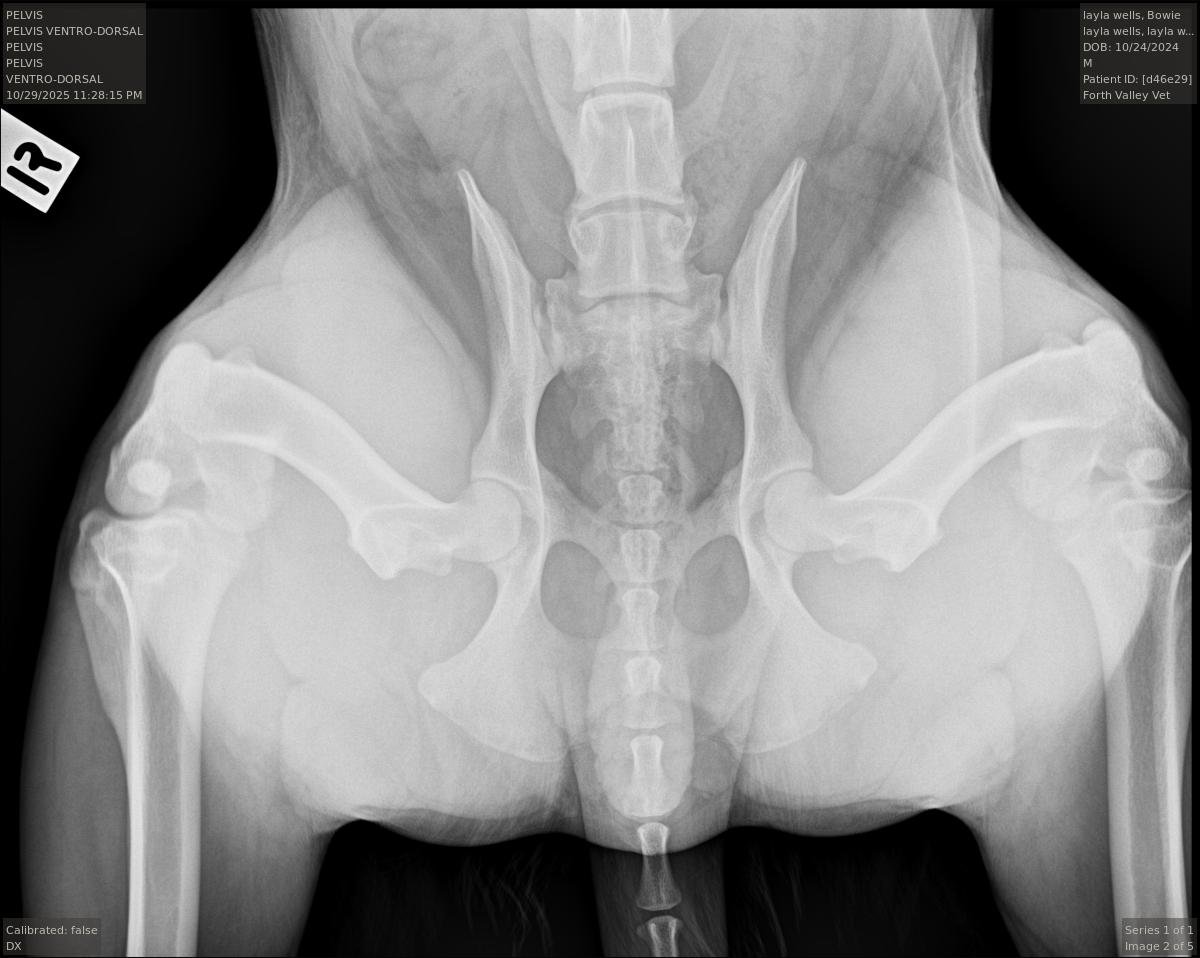
The Problem with Traditional X-Ray Methods
For decades, the industry standard was the "Hip-Extended View." While we still use this view to look for existing arthritis, it has a major flaw when it comes to prediction.
When a dog’s legs are pulled straight back for a traditional X-ray, the joint capsule twists and tightens up.
This can artificially force a loose hip into the socket, making it look "good" on film even if it is loose.
What is the PennHIP Hip screening method?
The PennHIP Evaluation is a next-generation radiographic screening method designed to assess hip joint laxity and predict the likelihood of developing osteoarthritis (degenerative joint disease) due to canine hip dysplasia.
Unlike standard hip scoring, which relies on a subjective look at how the hip looks on an X-ray, PennHIP is the most accurate and mathematical measurement of joint laxity.
"Laxity" essentially means "looseness."
Tight hips fit perfectly in the socket and are unlikely to develop arthritis.
Loose hips wobble in the socket, causing wear and tear that leads to arthritis.
It uses three specialized views, a distraction view, a compression view and the standard hip-extended view to provide a much more accurate and quantitative measurement than traditional methods.
The PennHIP method uses a specialized device to gently stress the joint while the dog is anaesthetised, measuring exactly how much the hip ball can move away from the socket. This gives us a Distraction Index (DI) score.
For Puppy Parents: The 16-Wk Advantage
One of the biggest advantage of PennHIP is timing. We can perform this test on puppies as young as 16 weeks old, much earlier that older screening techniques.
Early detection of hip laxity provides you with more personalised information about your puppy to help make more informed choices, particularly for larger breed dogs around their;
Lifestyle
Weight management
And other preventative care strategies
to enhance your dog’s long-term comfort and quality of life
For Breeders: A Better Tool for Genetics
If you are a breeder, your goal is to produce the healthiest possible puppies. PennHIP has a much higher heritability value than traditional hip scoring.
PennHIP measures the passive laxity (the mechanics of the joint) rather than just the shape of the bone, it is a far more accurate predictor of which dogs will pass on "good hip genes."
By selecting breeding dogs with low DI scores (tight hips), you can significantly reduce the incidence of dysplasia in your genetic line much faster than with other methods.

For Active and Working Dogs: Protecting Performance and Supporting their Long-term Health
PennHIP is a vital tool for active dogs, not just puppies. If you have an adult dog involved in agility, herding, or high-impact work, having a clear picture of their joint stability is key to supporting their active lifestyle.
A PennHIP score provides the data you need to make smart decisions about their training intensity. If the score indicates laxity, you can proactively modify their activity to prevent early-onset arthritis helping to ensure they stay comfortable and in the field for years to come.
What to Expect from Your Appointment
We know that medical procedures can be stressful, but the PennHIP process is straightforward and safe.
Your dog must be under general anaesthesia. This is crucial so that the muscles are completely relaxed; otherwise, the measurement won't be accurate.
We take three specific radiographs under the certified PennHIP protocol
The Distraction View
The Compression View
The Hip-Extended View
We’ll receive detailed results and interpret the hip laxity score together with you, and devise a personalised plan if needed.
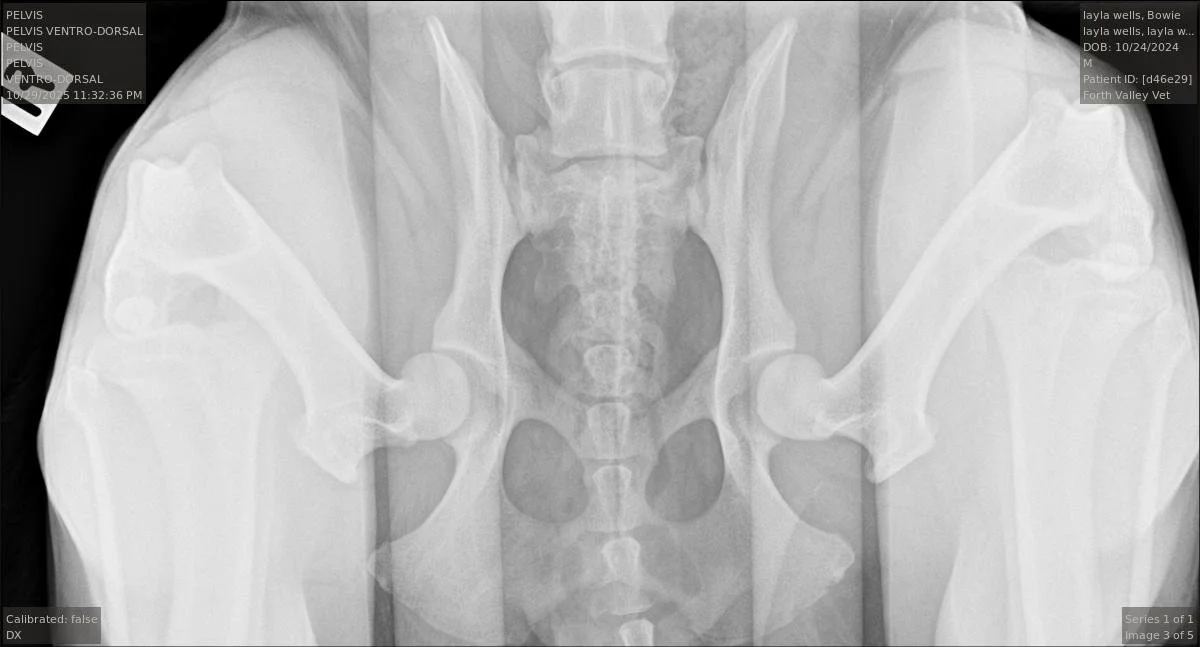
The Distraction View: To measure maximum laxity.
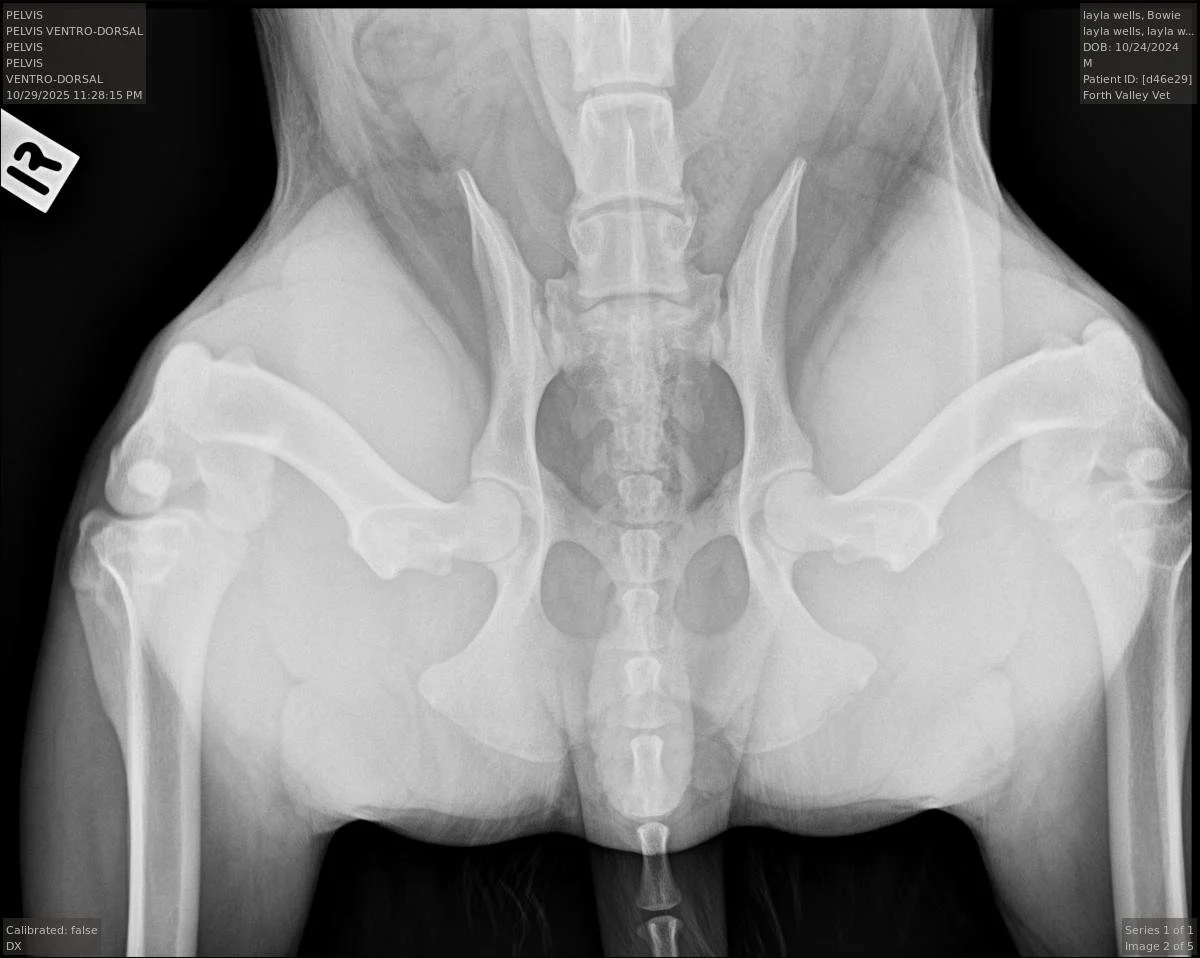
The Compression View: To see how well the hip fits into the socket.
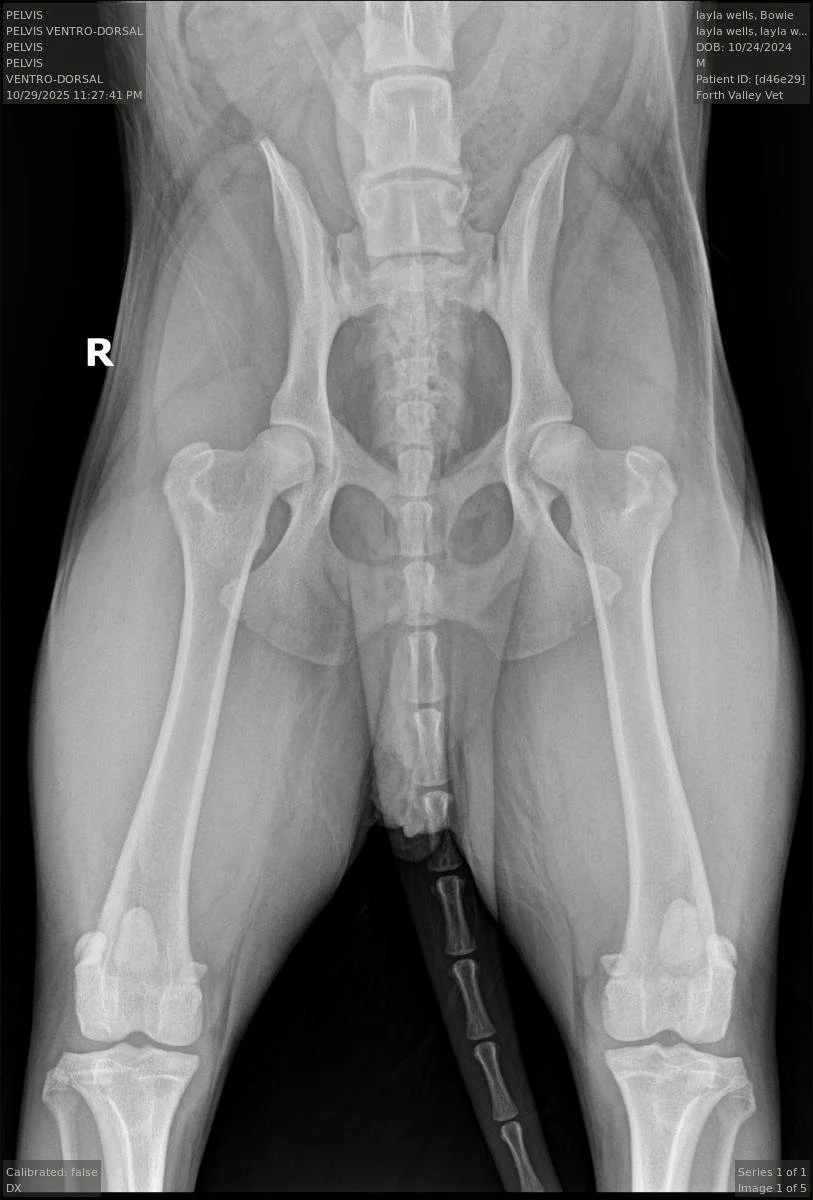
The Traditional Hip-Extended View: To check for any existing osteoarthritis.