
Getting ahead of fleas this spring
As the days warm up along the North West coast, fleas become more active, and they don't just live on your dog. A little planning now can help save you both a lot of scratching later.
Why fleas love the warmer months
Fleas thrive in warm, humid weather. The adult fleas you might spot on your dog are only a small part of the picture. Most of a flea population lives in your home as eggs, larvae and pupae, tucked into carpet, bedding, couches and the car.
When the weather warms up, that life cycle speeds up. A few fleas can become a household problem surprisingly quickly.
A note on ticks in Tasmania
Tasmania's tick situation is different from the mainland's, and paralysis ticks haven't been a common problem here. We are now aware they have recently been found in our northern regions, so as the weather warms up we're keeping an eye on this as well.
If your dog spends time in bushland or scrub, it's a good habit to check your dog after walks.
What a paralysis tick actually does
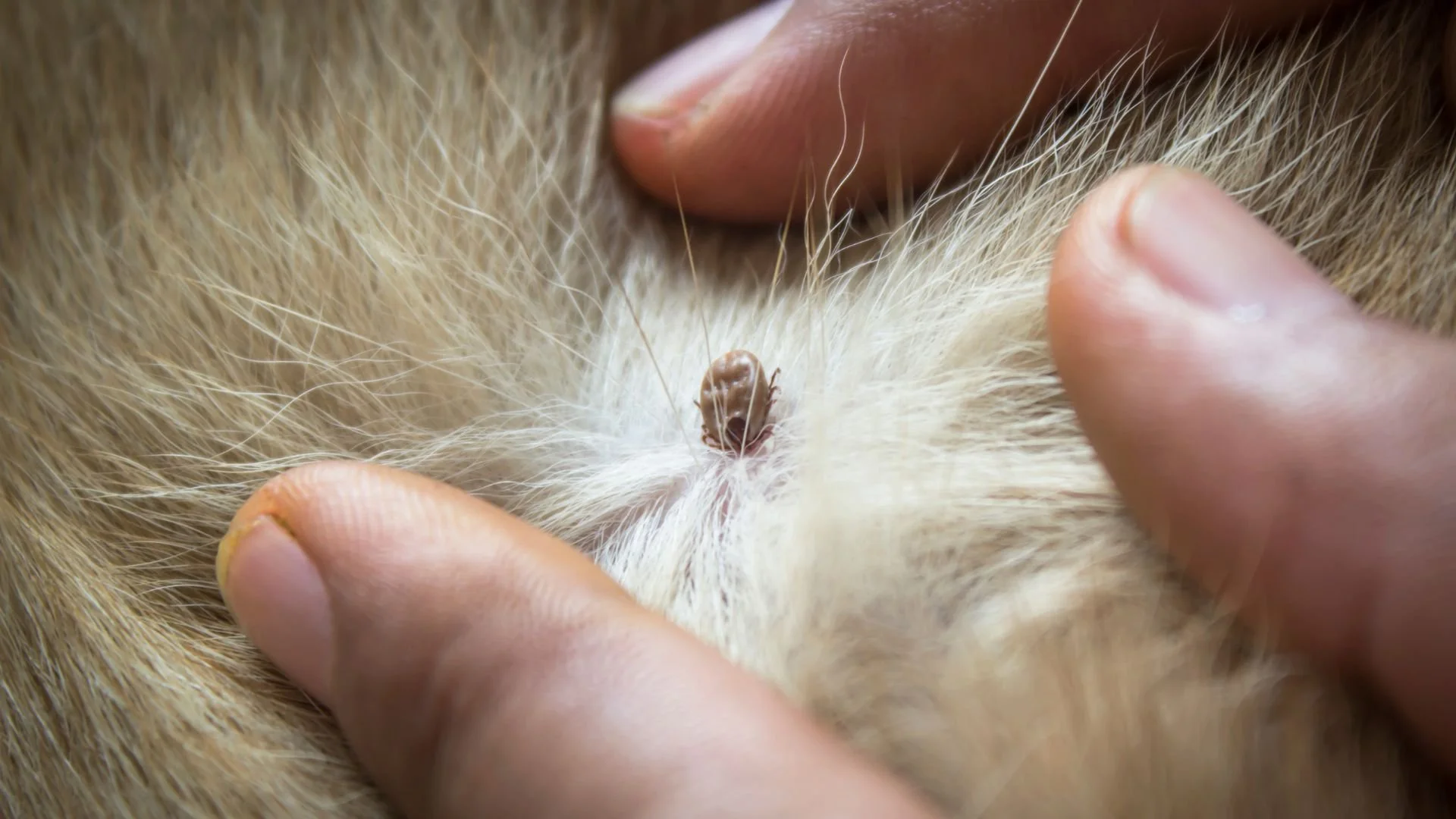
A paralysis tick is small, often no bigger than a sesame seed when it first attaches. Once it latches on, it releases a toxin that slowly shuts down the nerves controlling the muscles.
It usually starts subtly. You might notice:
a wobbly or weak back end
a change in bark or voice
coughing, gagging or vomiting
laboured or noisy breathing
As the toxin spreads, the paralysis moves forward through the body. The most serious risk is that it affects the muscles used for breathing and swallowing.
If you notice any of these signs, call us straight away on (03) 6428 2703.
What fleas can mean for your dog
For many dogs, fleas mean itching and scratching. Some dogs are allergic to flea saliva, and even a single bite can cause intense itching, red skin and hair loss, often around the lower back and tail. This is called flea allergy dermatitis. Fleas can also carry tapeworm, which dogs pick up when they swallow a flea while grooming.
Signs to watch for:
Scratching, licking or chewing more than usual
Red, irritated skin or small scabs, especially around the lower back and tail
Hair loss or thinning patches
Small black specks in the coat (flea dirt). Place them on damp white paper: if they turn reddish-brown, they're flea dirt
Where Bravecto Quantum comes in

Bravecto Quantum is an injection we give here at the clinic. One injection protects your dog against ticks and fleas for 12 months.
What we like about it, from a vet's point of view, is how it works. The active ingredient is held in tiny microspheres under the skin, which release it slowly and steadily over the year. Tablets and chews work differently. Each tablet or chew dose gives a much higher peak that tapers off when the next dose is due. The injection keeps a lower, even level of protection the whole way through.
The best part: nothing to remember
Most of us have had the "wait, when did we last give the dog their tablet?" moment. Monthly or three-monthly doses are easy to miss when life gets busy, and a missed dose leaves a gap in protection.
With Bravecto Quantum there's no calendar reminder and no hiding a chew in cheese for a dog who knows exactly what you're up to. It's done once, in the clinic, and your dog is covered for the year.
Covering the rest of the parasite list
Tick and flea protection is only part of the picture. Intestinal worms still need looking after. So when your dog has their Bravecto Quantum injection with us, we include a full year of intestinal worming at no extra cost.
That covers all the main parasite groups for the year in one simple plan.
Have a chat with us
If you'd like to get ahead of fleas this season, ask us at your next visit or call us on (03) 6428 2703.
We're happy to talk through whether Bravecto Quantum is the right fit for your dog.
Dr Joh and the Forth Vet team