Benjiman looked perfectly healthy. His gums told a different story.
Some patients make it very clear when something isn't right. Cats, as a rule, do not. They are masters at hiding discomfort, especially in their mouths, which is why a dental check is part of every standard consult and every Annual Health and Vaccination Consult at Forth Vet. Benjiman's story shows why it matters.
Meet Benjiman
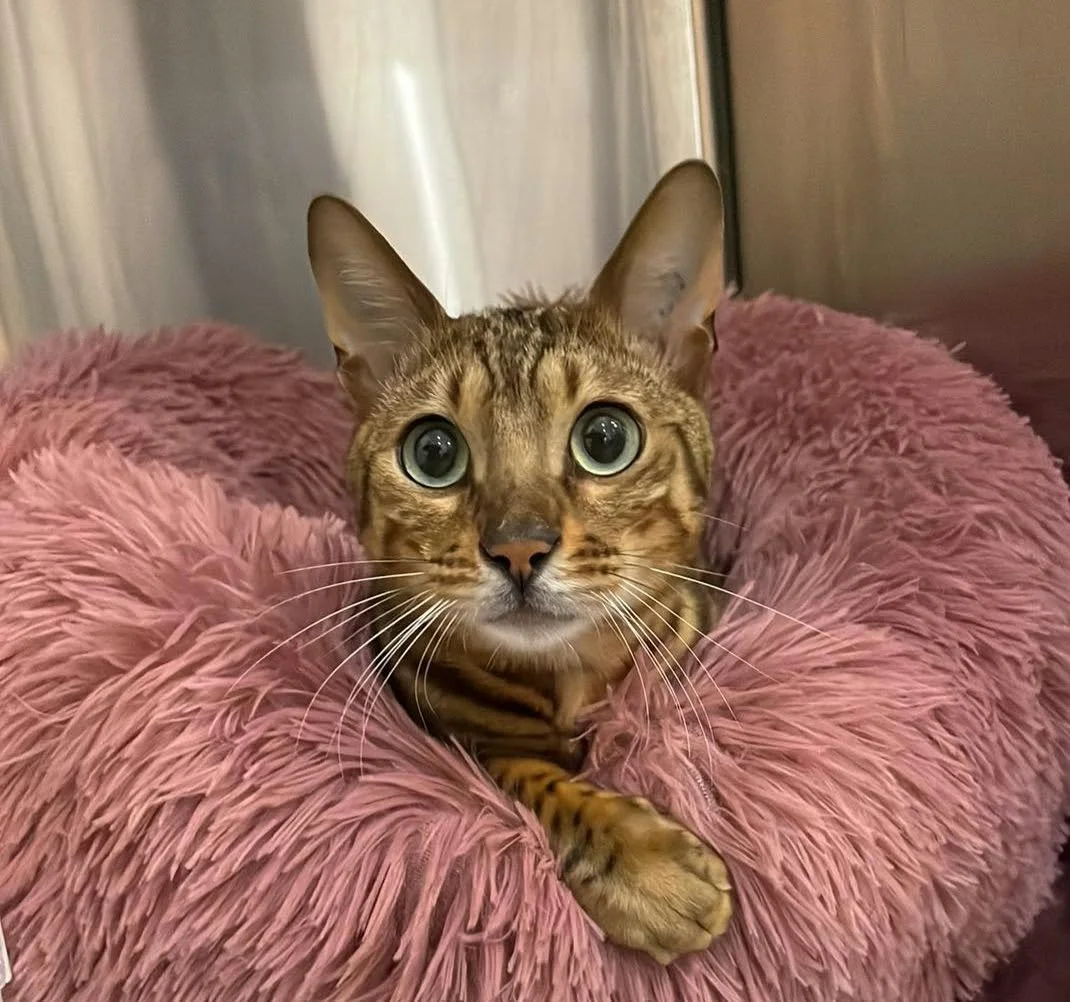
Penelope has a real soft spot for Bengals. Before Benjiman, she shared her home with Narla, a much-loved Bengal girl, and when Narla passed away, Pene wasn't sure she was ready to open her heart to another cat. Then, in what she calls a fateful moment, Benjiman came into her life.
Now four, Benjiman has well and truly made himself at home. He is cheeky, playful and bold, with all the energy Bengals are known for. He'll happily play fetch, which not every cat will do, and when he isn't chasing a toy you'll usually find him in his favourite spot: his running wheel.
With a cat this full of life, Pene had no reason to think anything was wrong when she brought him in to see Dr Jahk for his routine consult.
What Dr Jahk's dental check showed
Dr Jahk began with a thorough nose-to-tail health check. A dental check is part of every standard consult and every Annual Health and Vaccination Consult we do, because a pet's teeth and gums can tell us a great deal that the pet can't.
When Dr Jahk examined Benjiman's mouth, he found gingivitis along his gums. As they talked it through, Pene realised Benjiman's breath had been a little smelly. It was such a small change, and he was still eating well and racing on his wheel, that it had been easy to put down to "just cat breath".
Plenty of owners would have thought the same.
Why Dr Jahk recommended a scale and polish
Gingivitis is inflammation of the gums, caused by plaque: a sticky film of bacteria that builds up on the teeth. It's the earliest stage of gum disease, and the good news is that it's often the easiest stage to treat.
Left alone, though, it can progress to more serious dental disease, pain and even tooth loss. Dr Jahk explained that the best way to stop that happening was a scale and polish, with dental X-rays to check what was going on below the gumline. Pene wasn't worried. As she saw it, it made sense to get onto it now, before it had the chance to get worse.
Inside Benjiman's scale and polish
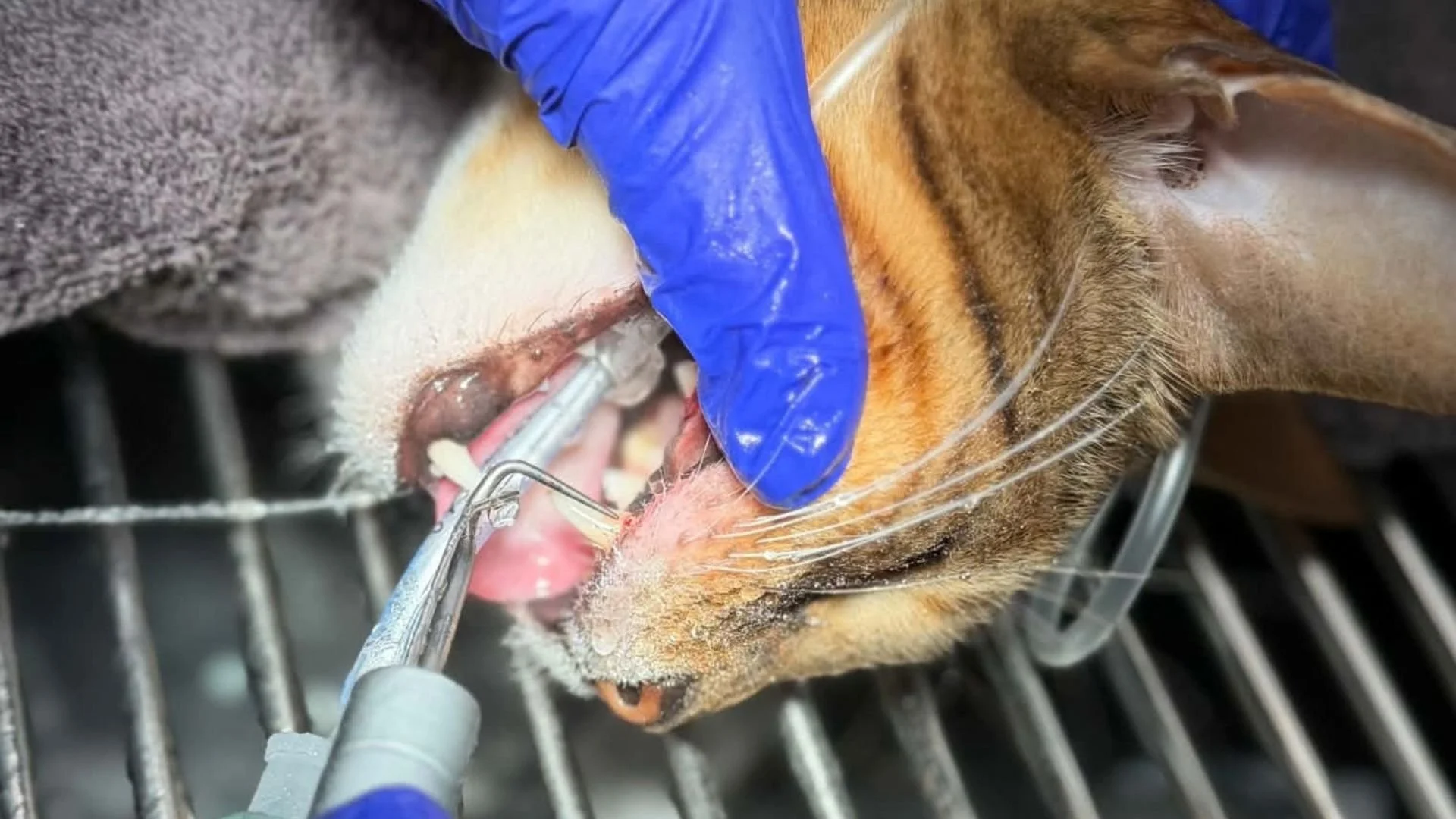
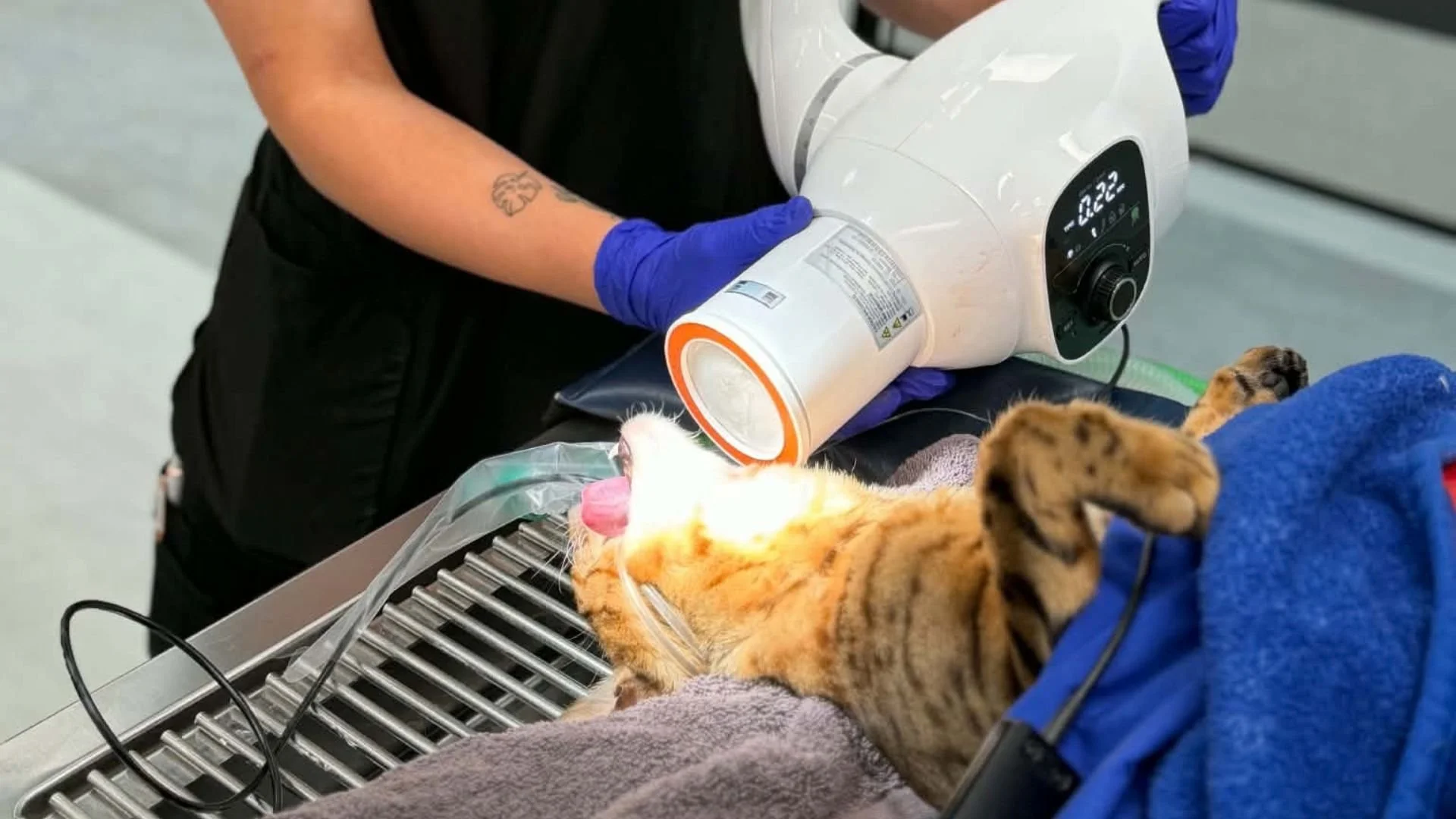
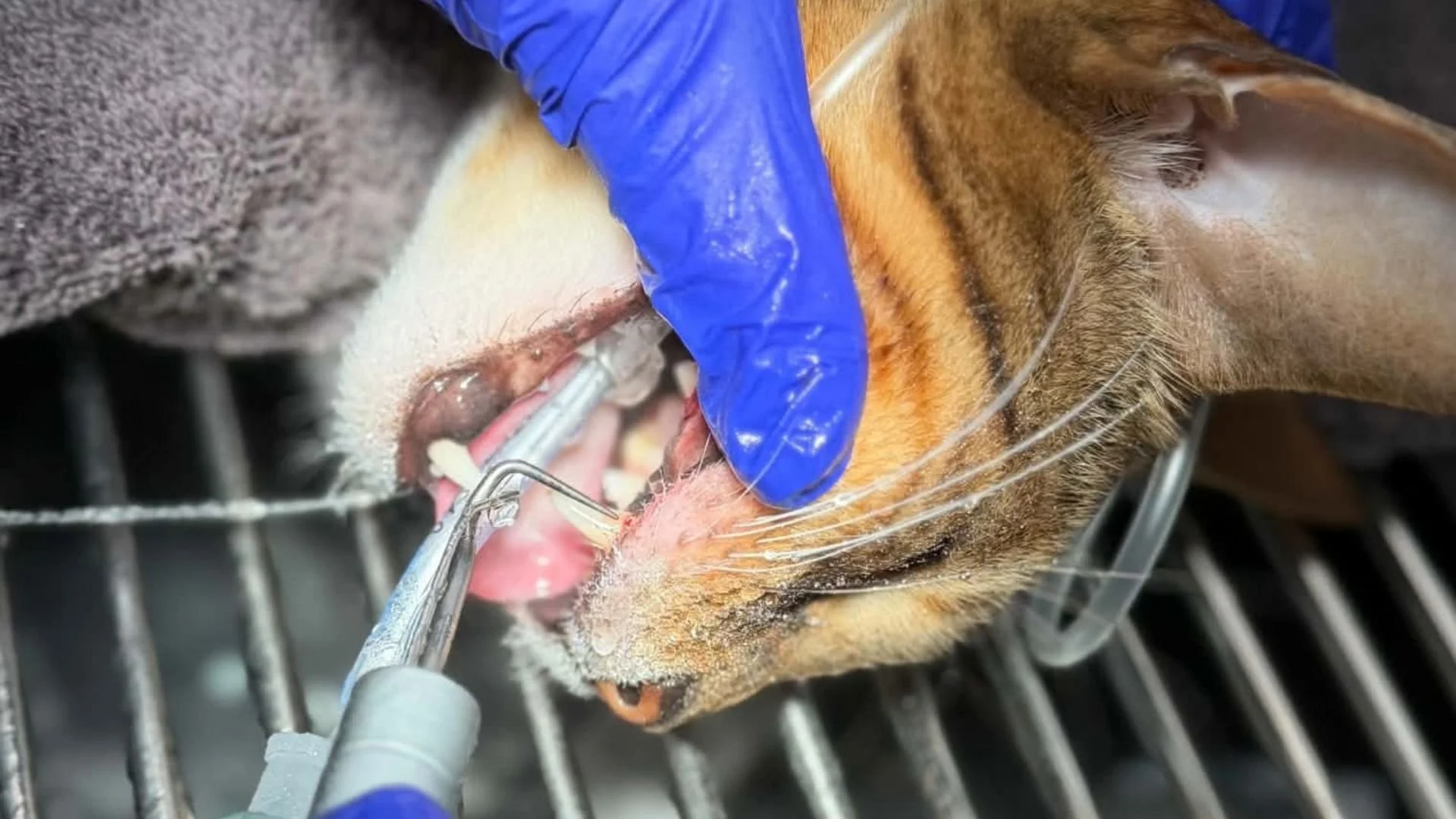
On the day of his procedure, before we started, Benjiman had a full physical check and a pre-anaesthetic blood test to check how his internal organs were working. He was then given a general anaesthetic. A general anaesthetic allows us to clean thoroughly and safely below the gumline. It also keeps our patient comfortable and free from stress, and lets us take clear, accurate dental X-rays. Throughout his anaesthetic, one of our nurses monitored him closely.
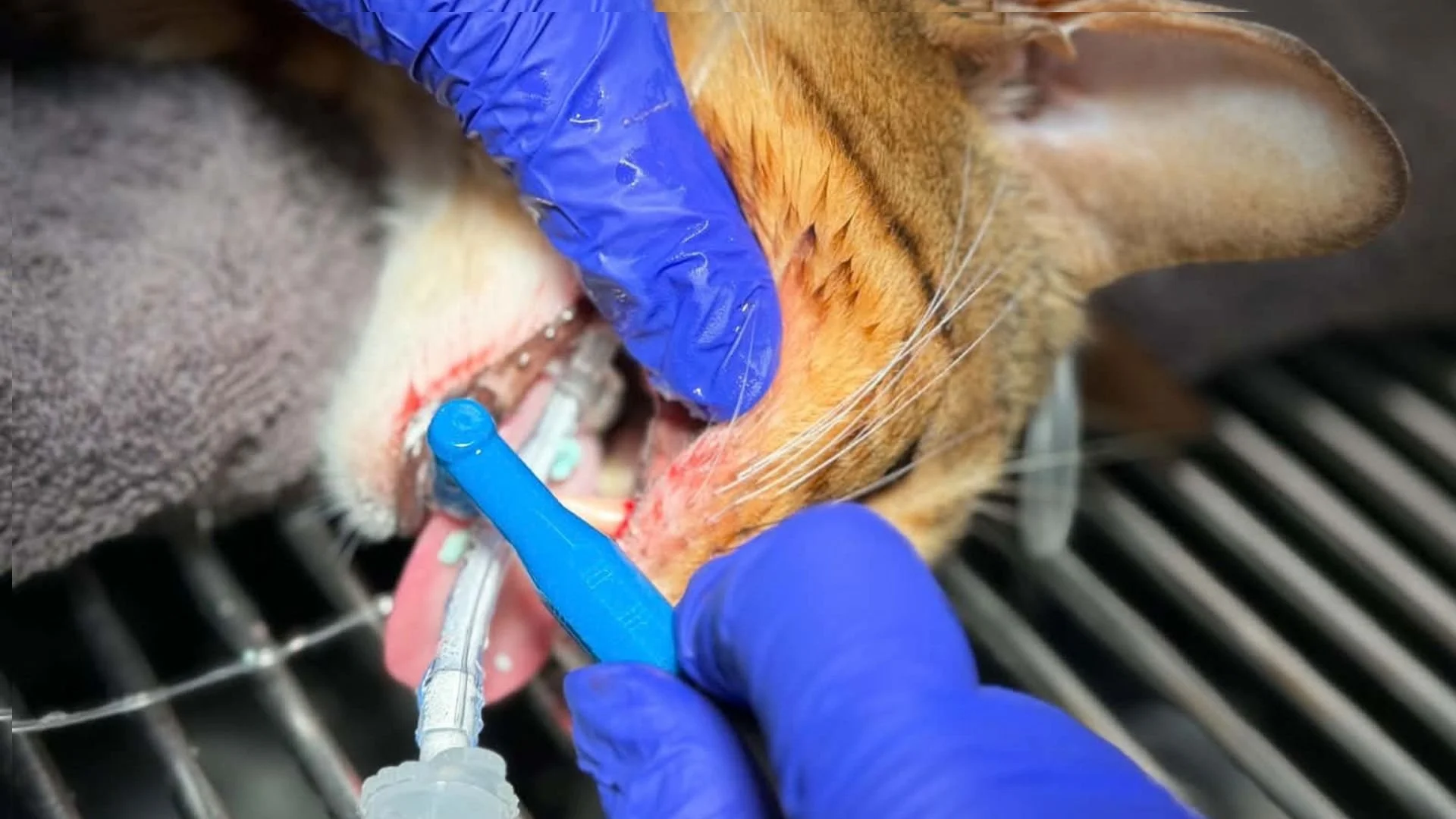
Once Benjiman was safely under anaesthetic, our team began his dental treatment. The scale removed the plaque and tartar (hardened plaque) from his teeth, including under the gumline, where bacteria do the most damage. The polish followed, smoothing the surface of each tooth so plaque would find it harder to stick and build up again.
What the X-rays showed
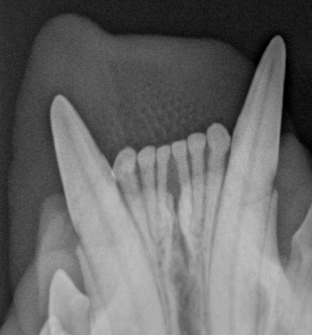
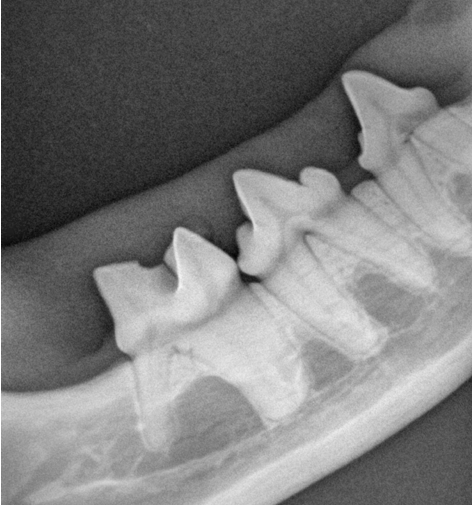
While the clean took care of everything we could see, the X-rays were about what we couldn't. Much of each tooth sits below the gumline, along with the roots and the bone that hold it in place. Dental X-rays let us check those hidden areas for problems like damaged roots, bone loss or tooth resorption, a common and painful condition in cats where the tooth slowly breaks down.
For Benjiman, the X-rays brought good news. Not a single tooth needed to be removed. We did find a tooth that had resorbed, with the gum healed over it, but the site didn't need any treatment. We found no other hidden problems. We'll simply keep an eye on that tooth with future dental X-rays when needed. Finding his gingivitis early had made all the difference.
Benjiman is a great example of why a dental check is part of every consult. Because his gingivitis was caught early, a scale and polish was all he needed. Cats are very good at hiding mouth discomfort, so a little bad breath is often the only clue a pet parent gets."
Back on his wheel
Benjiman's recovery at home went smoothly, and he was soon back to his cheeky, self: playing fetch and clocking up the laps on his wheel.
Could your pet be hiding something too?
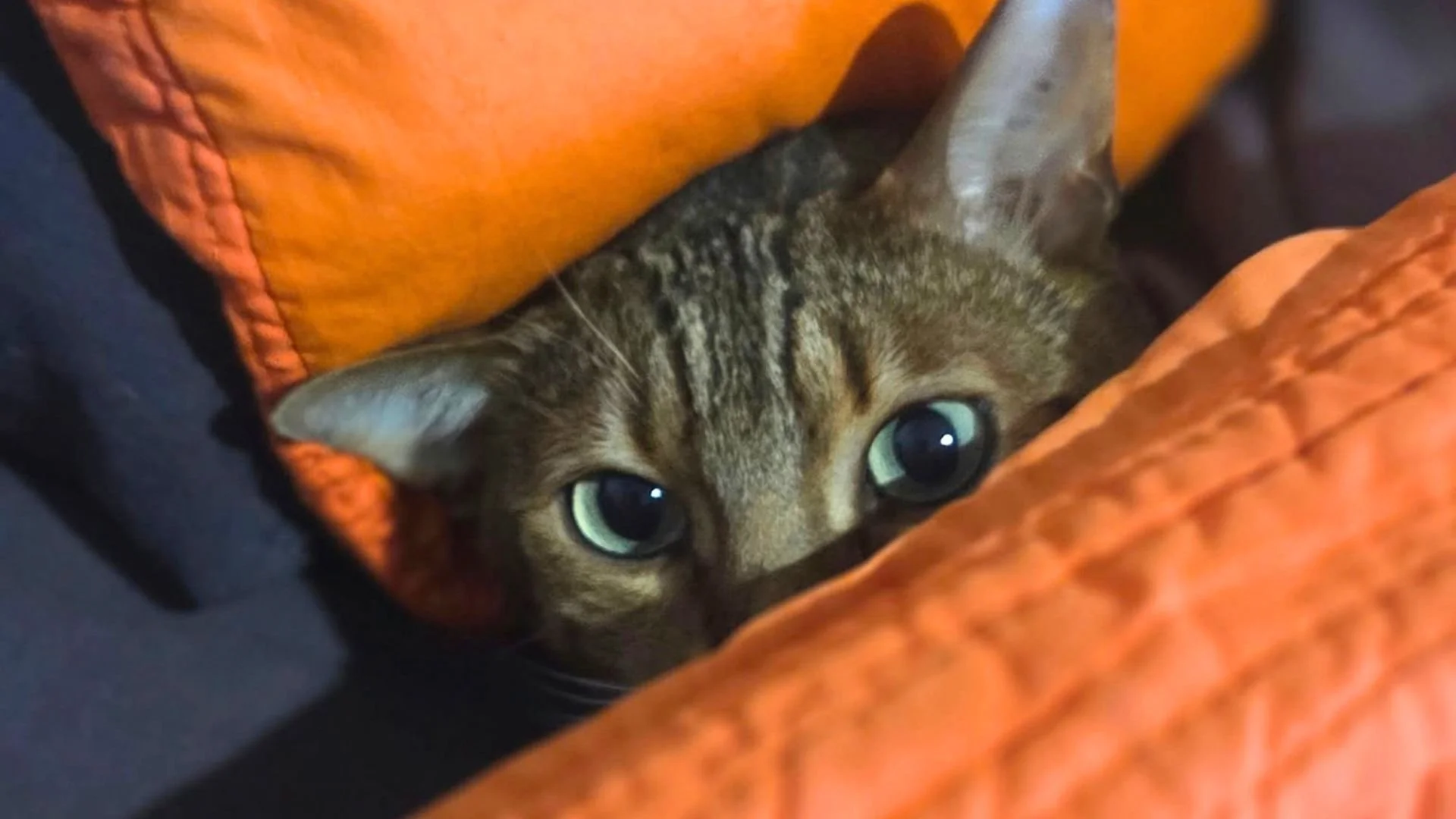
Benjiman's story is a good reminder that a pet can seem perfectly well and still have something going on in their mouth. Many pets show no obvious signs at all, which is why regular dental checks matter so much. If you do notice any of these, it's worth booking a check:
Bad breath, even just a little
A red line along the gums, or gums that bleed
Yellow or brown build-up on the teeth
Chewing on one side, dropping food or eating more slowly
Pawing at the mouth or rubbing the face
Dental care can be planned ahead, and we offer a range of payment options to help, including VetPay. Find out more about our payment options
Book your pet's Dental Check by calling our team on (03) 6428 2703.