
Slowing down is not just “getting older”
When the weather becomes colder, many owners notice that their senior pet takes a little longer to get moving.
They may be slower to rise in the morning, hesitate before using the stairs or seem less enthusiastic about their usual walk. A cat may stop jumping onto a favourite chair or begin sleeping somewhere that is easier to reach.
These changes are often dismissed as a normal part of ageing.
Ageing can certainly affect strength, balance and energy. However, ongoing stiffness, reduced mobility and changes in normal behaviour can also be signs of pain. Slowing down may be common in older pets, but pain should not automatically be accepted as normal.
Why can mobility problems become more noticeable during winter?
Cold weather does not necessarily cause arthritis, but winter can make existing mobility problems easier to notice.
Pets may spend longer periods resting during colder weather. After being still for some time, stiff joints can take longer to loosen and movement may be uncomfortable.
Shorter days and wet weather can also mean less regular exercise. Reduced movement can affect muscle strength, flexibility and joint support.
Cold floors, wet paths and slippery indoor surfaces may create additional challenges for pets that already have joint pain, weakness or poor balance.
Tasmanian winters can be particularly difficult for senior pets because cold, wet and changeable conditions may continue for extended periods.
Arthritis Explained
Arthritis is a broad term used to describe conditions affecting the joints. One of the most common forms in dogs and cats is osteoarthritis.
Osteoarthritis is a progressive condition involving changes within the joint. Over time, the smooth cartilage that helps a joint move comfortably can become damaged. The joint may become inflamed, painful and less flexible.
Pets can then begin changing the way they move to avoid discomfort. This may place additional strain on other joints, muscles and areas of the spine.
Arthritis is more common in senior pets, but it is not limited to old age. Previous injuries, joint abnormalities, body shape, excess weight and some inherited conditions may increase the risk.
Recognising Mobility Issues and Pain in dogs

Dogs do not always cry, whimper or show an obvious limp when they are in pain.
Many signs are subtle and develop gradually. Because the change happens slowly, owners may not immediately recognise how much their dog’s movement or behaviour has altered.
Signs can include:
Stiffness after sleeping or resting
Taking longer to stand up
Difficulty sitting or lying down comfortably
Reluctance to use stairs
Hesitation before getting into the car
Avoiding jumping onto furniture
Slowing down or falling behind during walks
Taking shorter steps
Slipping more often on smooth floors
Licking or chewing around a joint
Becoming less interested in play
Irritability when touched or moved
Restlessness or difficulty settling at night
Toileting accidents because getting outside has become more difficult
Changes in posture or the way weight is distributed
Sometimes the first sign is simply that a dog seems quieter or less interested in activities they previously enjoyed.
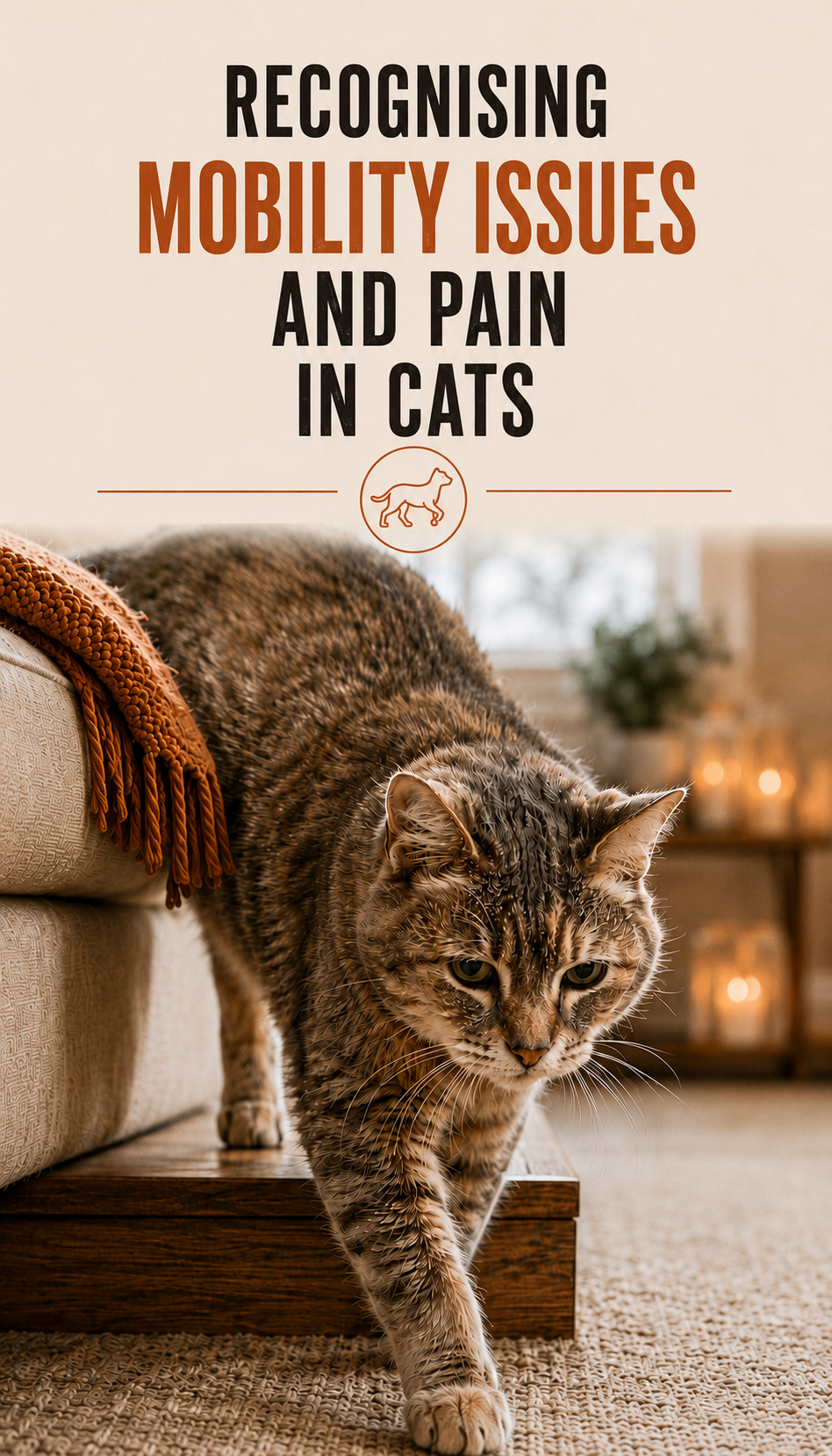
Recognising Mobility Issues and Pain in Cats
Pain and mobility changes can be particularly difficult to recognise in cats.
Cats naturally hide vulnerability, and arthritis does not always cause an obvious limp. Behavioural changes are often more noticeable than changes in their walking.
Signs can include:
Jumping less frequently
Hesitating before jumping
Choosing lower furniture or sleeping places
Using several smaller jumps to reach a favourite position
Difficulty using stairs
Reduced grooming, particularly around the back and hindquarters
A matted or untidy coat
Difficulty stepping into a high sided litter tray
Toileting beside the litter tray
Sleeping more or becoming less active
Reduced interest in play
Hiding or avoiding interaction
Irritability when touched or picked up
Overgrown claws caused by reduced activity or scratching
A cat that no longer jumps onto the bed may not have simply changed its preference. It may be avoiding a movement that has become painful.
What should I do if I notice changes?
The first step is a veterinary examination and pain assessment.
There are many possible causes of reduced mobility, including arthritis, spinal pain, muscle weakness, neurological conditions, injuries and other health problems.
A veterinary examination helps identify where the discomfort may be coming from and whether further investigation is needed.
Our Vet assessment looks outs:
How your pet stands, walks and changes position
Joint movement and flexibility
Muscle strength and muscle loss
Areas of pain or sensitivity
Balance and coordination
Weight and body condition
Review of changes in behaviour and normal activities

Record your pet getting up after resting, walking across the room, using stairs or attempting a movement that has become difficult.
Managing arthritis and joint pain with your vets support.
There is no single treatment that is right for every pet.
Managing arthritis usually involves combining several approaches based on the pet’s diagnosis, health, pain level, lifestyle and response to treatment.
Arthritis injections
Veterinary arthritis injections may be recommended to help manage pain and improve mobility.
There are different types of injectable treatments, and they do not all work in the same way. The appropriate option will depend on whether the patient is a dog or cat, their medical history and the nature of their joint condition.
Your vet can explain how the recommended injection works, how frequently it is given and how your pet’s response will be monitored.
Pain relief medications
Veterinary prescribed medication can be an important part of managing arthritis and chronic pain.
The appropriate medication depends on the individual pet and any other medical conditions they may have. Blood testing or ongoing monitoring may sometimes be recommended before or during treatment.
Never give a dog or cat human pain medication unless a veterinarian has specifically instructed you to do so.
Joint supplements
Some pets may benefit from an appropriate joint supplement as part of their broader management plan.
The ingredients, quality and evidence behind supplements can vary considerably. A product being described as natural does not necessarily mean it is effective or appropriate for every pet.
Some of the supplements we discuss include Antinol, 4-cyte, Rosehip, Cenmaris, and Omega oils. There are also other options in addition to these and this forms part of your vet's recommendation based on your pet's health status and needs.
Weight management
Maintaining a healthy weight is one of the most important ways to support painful joints.
Excess body weight places additional pressure on joints and can make movement more difficult. It may also reduce a pet’s willingness to exercise, leading to further loss of muscle strength.
Weight management does not mean making sudden or severe changes. Our vet can help develop a realistic plan that considers nutrition, portion size, treats, exercise and any medical limitations.
Gentle and regular movement
Complete rest is not usually the best long-term approach for arthritis.
Regular, controlled movement helps support muscle strength and joint function. The type and amount of activity should be suited to the individual pet.
For many dogs, several shorter walks may be more manageable than one long walk. Avoid suddenly increasing exercise on a fine winter day after several inactive days.
For cats, gentle play, easily accessible climbing options and movement between comfortable areas can help maintain activity without requiring large jumps.
Quick Winter Comfort Tips
Small changes around the home can make daily life easier for your senior pet not only during the winter months but all year long.
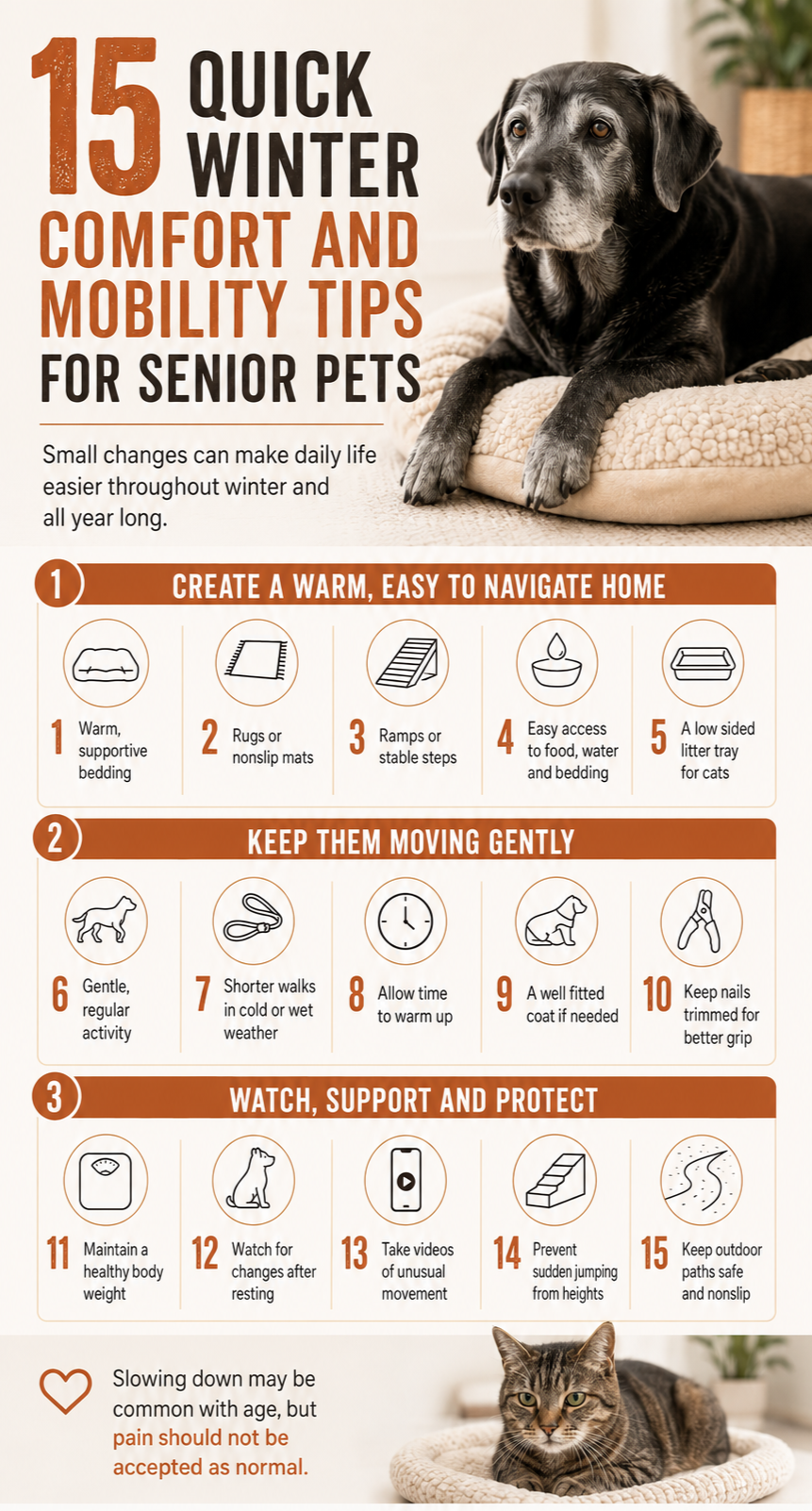
Provide warm, supportive bedding away from cold floors and draughts.
Place rugs or nonslip mats over slippery floors.
Use ramps or stable steps to reduce jumping.
Keep food, water and bedding easy to reach.
Provide a low sided litter tray for cats with reduced mobility.
Continue gentle, regular activity rather than allowing long periods of complete inactivity.
Choose shorter walks during cold or wet weather if your dog becomes tired or stiff.
Give your dog a few minutes to move gently before expecting faster activity.
Consider a well fitted coat for dogs that feel the cold.
Keep nails trimmed to improve grip and balance.
Maintain a healthy body weight.
Watch for changes after your pet has been resting.
Take videos of any unusual movement to show your veterinarian.
Prevent sudden jumping from high furniture or vehicles.
Make sure outdoor paths are not slippery or difficult to navigate.
How often should senior pets have a health check?
Forth Valley Veterinary Clinic generally considers dogs to be entering their senior years from around eight years of age.
Age is only one factor. Breed, size, medical history and existing health conditions also affect how quickly a dog ages and how frequently they should be examined.
Cats also benefit from more regular veterinary assessment as they move into their senior years, particularly because they often hide pain and illness.
Senior pets and animals with chronic pain or illness may need veterinary examinations more frequently than once a year.
At a minimum Forth Valley Vet Clinic recommend a bi-annual senior health check.
Your pet’s comfort can often be improved
The key thing to remember is that mobility pain should not automatically be accepted as part of getting older.
A change in movement or behaviour may be your pet’s way of showing that something hurts.
Recognising those changes, arranging a veterinary assessment and making simple adjustments at home can help senior dogs and cats remain more comfortable and involved in the activities they enjoy.