It's not just bad breath: What's really going on under their gumline
Most of us know when a tooth hurts. We can point to it and ask for help. Our pets can't, and they are remarkably good at carrying on as usual even when their mouth is sore.
A quiet kind of pain
Dental disease is a little like arthritis. It usually builds slowly. A dog may still greet you at the door and finish their dinner, and a cat may still curl up in their favourite spot. The changes can be so small that we often only notice them afterwards. Once a painful tooth has been treated, a pet can suddenly seem brighter, more playful, keener on their food or happier to have their face touched.
At Forth Vet, we see that change often. It's one of the reasons we take dental health so seriously.
Signs you might notice at home

Some pets show clear signs. Many show none at all. If you notice any of these, it's worth booking a check:
Bad breath, even just a little
A red line along the gums, or gums that bleed
Yellow or brown build-up on the teeth
Chewing on one side, dropping food or avoiding hard food
Pawing at the mouth or rubbing the face
Slowing down, or seeming quieter than usual
Still eating doesn't always mean comfortable. This is especially true for cats.
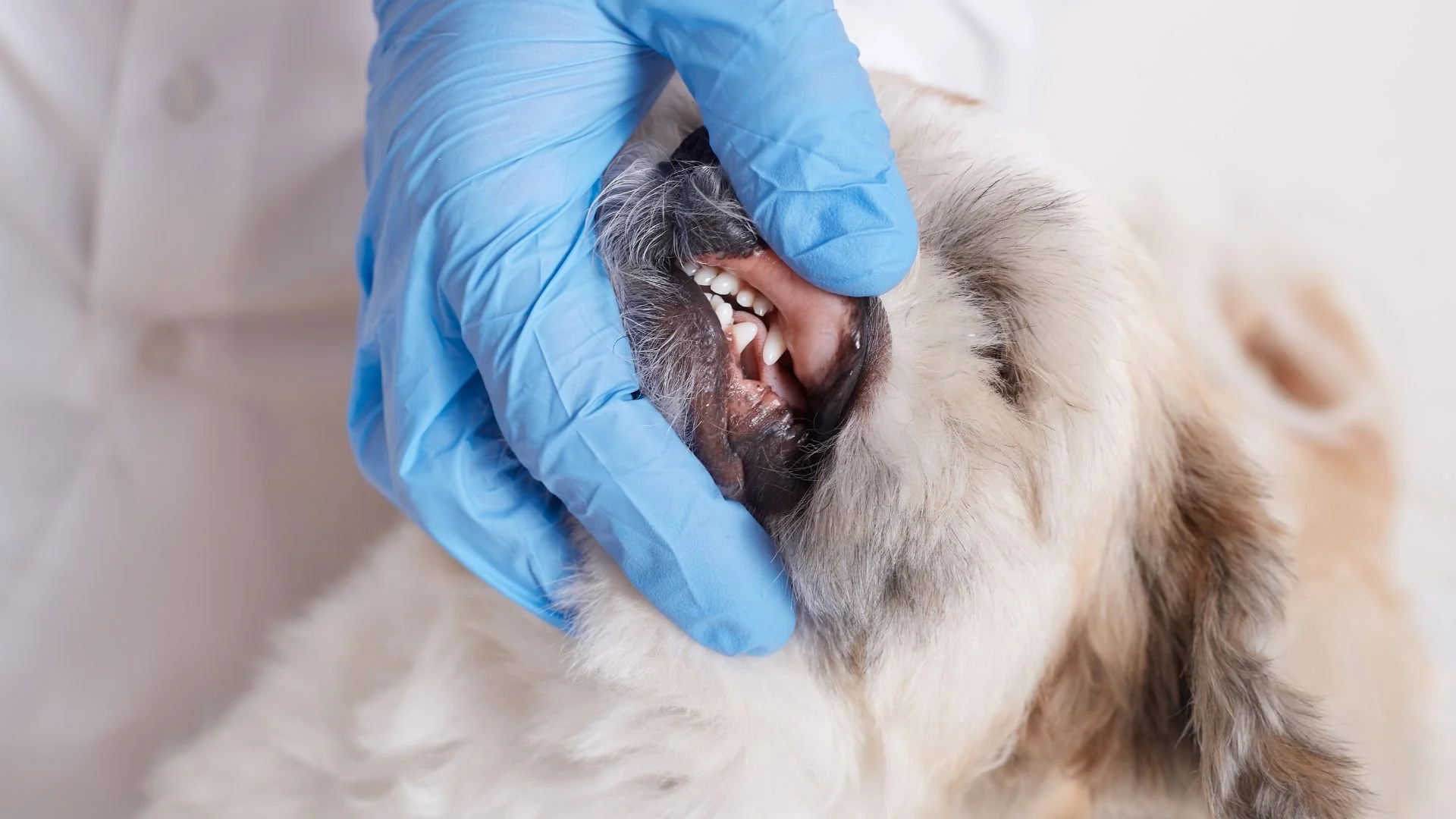
What's happening below the gumline
Every day, a soft film of bacteria called plaque forms on the teeth. If it isn't removed, it hardens into tartar (the yellow-brown build-up you can see) and irritates the gums.
What you can see is only part of the picture. Over time, bacteria work their way below the gumline. There they damage the tissue and bone that hold each tooth in place. Broken teeth, infected roots and other painful problems can also sit where no one can see them during an ordinary mouth check. This can happen even when the tooth itself looks normal.
The stages of dental disease
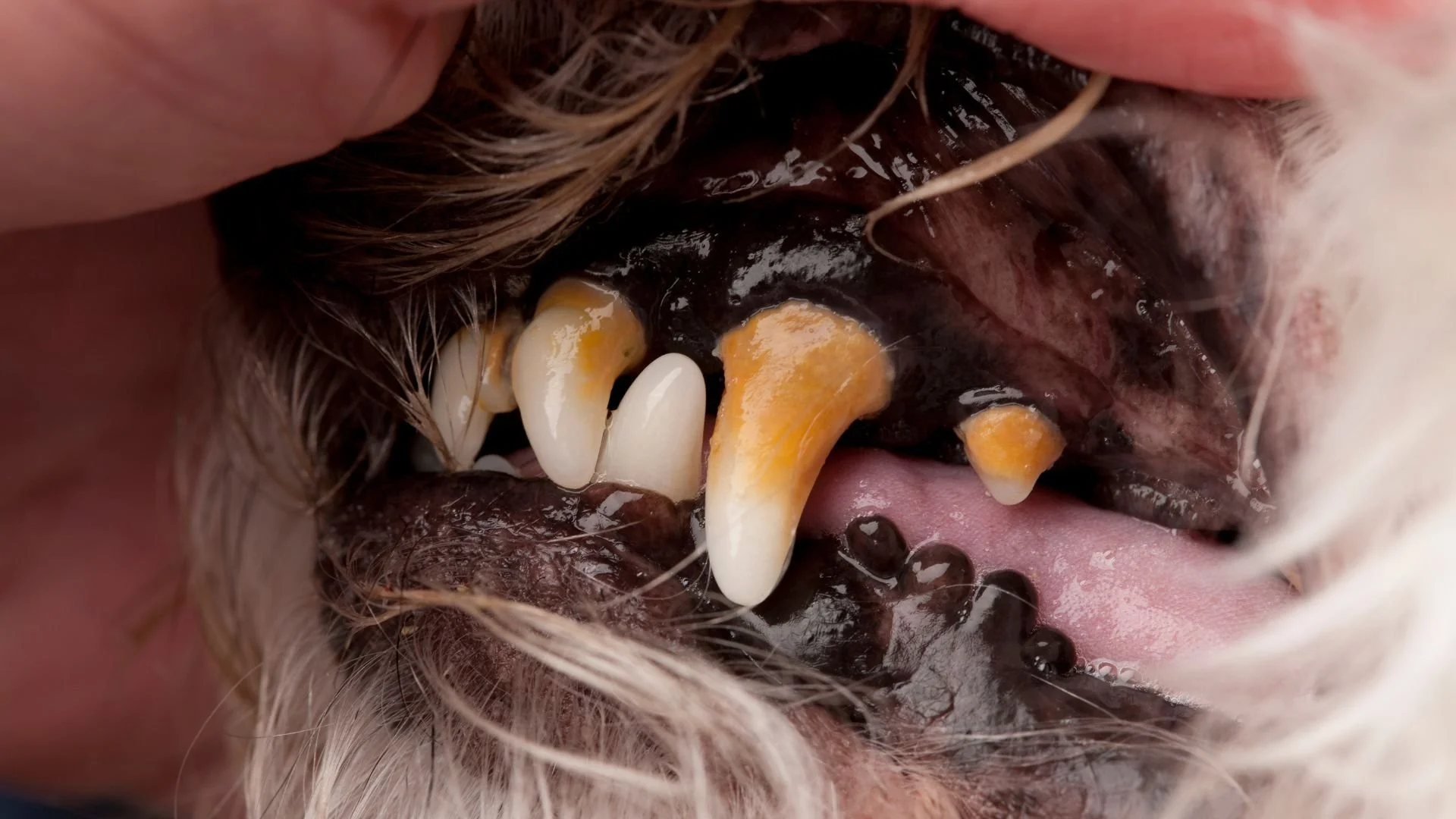
Dental disease usually moves through four stages.
Stage 1: Gingivitis. Red, inflamed gums caused by plaque. At this stage the damage can often be reversed with a professional clean and good home care.
Stage 2: Early gum disease. Infection starts to affect the tissue and bone that hold the teeth in place.
Stage 3: Moderate gum disease. More bone is lost, the gums may pull back, and teeth can become sore.
Stage 4: Advanced gum disease. Severe bone loss, with loose or infected teeth and ongoing pain. Teeth often need to be removed.
The earlier we find it, the simpler it usually is to treat.
What happens at a Dental Check
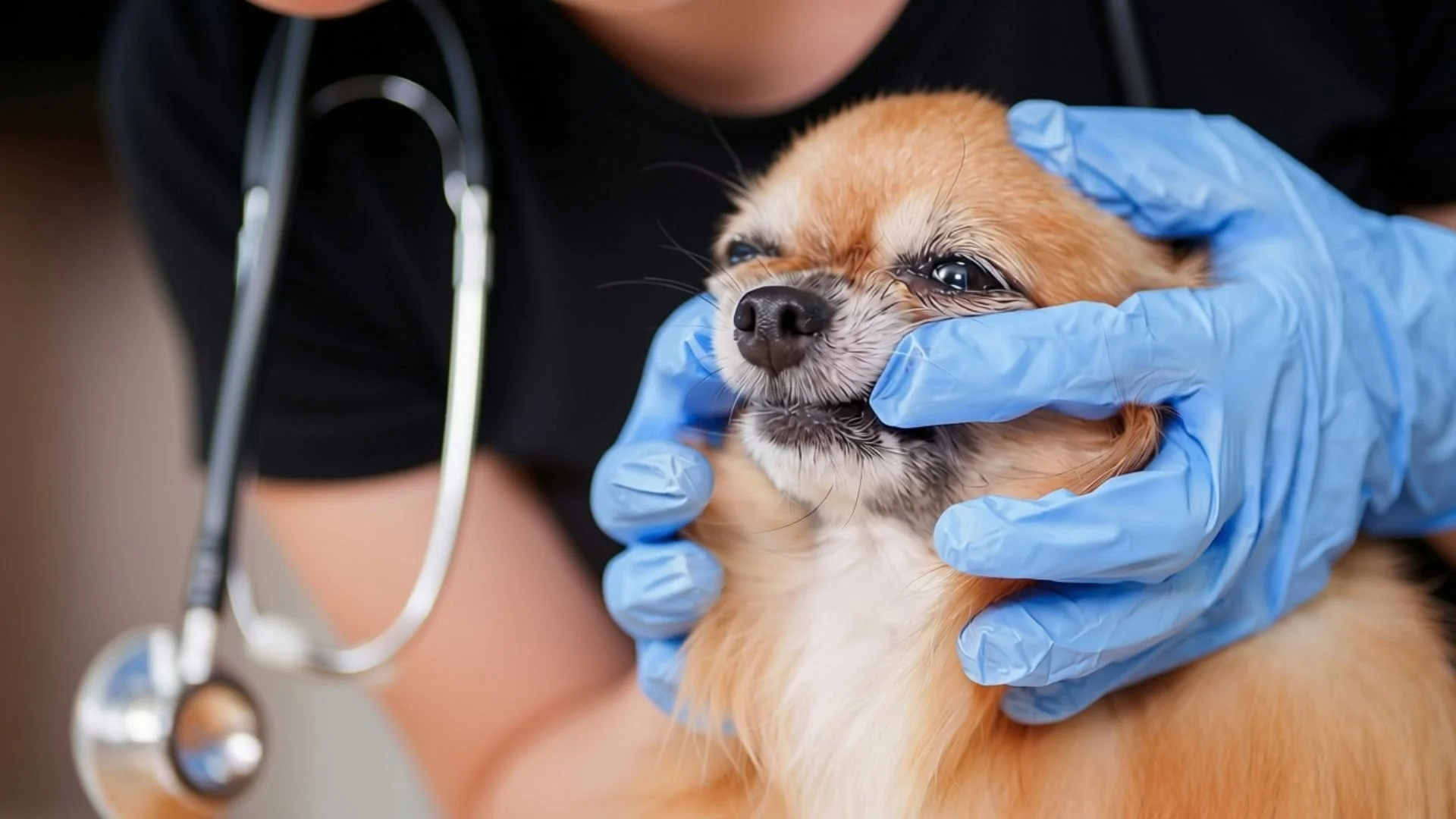
A dental check is part of every standard consult and every Annual Health and Vaccination Consult at Forth Vet. This month, we're also encouraging all dogs and cats of any age, especially senior pets, to come in for a Dental Check. Dental disease can affect pets at any age, including young animals whose teeth are crowded or poorly aligned.
During the 30-minute appointment, a vet will examine your pet's teeth and gums. They'll look for tartar, inflamed gums, broken teeth and signs of discomfort. They'll also talk through what you're doing at home and what seems to be working. Then they'll recommend the next step. That might be keeping up your current routine, trying a different home care option, or booking a dental procedure.
If we recommend treatment, we'll explain what we can see, what we're concerned about and what the procedure is intended to find or treat. We'll also give you a detailed treatment plan with costs before you book.
We recommend a dental check every six months. This lets us catch changes while they're easier to manage.
When a scale and polish, X-rays or extractions are needed
When a professional clean is needed, our standard of care is an ultrasonic scale and polish, together with dental X-rays.
The scale removes plaque and tartar from every tooth, above and below the gumline, where disease often starts. The polish then smooths the tooth surfaces, so plaque is slower to build up again. Dental X-rays show the roots and the bone around them. They can reveal problems hidden beneath a tooth that looks normal from the outside.
Sometimes a tooth is badly damaged, infected or painful. In that case, removing it (an extraction) may be the kindest option. If we find anything under anaesthetic that we haven't already discussed with you, we'll always call you at the time to talk through the plan before we go ahead.
That's the real value of a dental procedure. It shows us what's happening in the whole mouth, so we can treat the sources of pain and infection. We don't judge dental health by how white the visible teeth look.
"Why does my pet need an anaesthetic?"
It's one of the most common questions we're asked, and it's a fair one. Cleaning below the gumline and taking clear X-rays simply isn't possible with a pet who is awake.
A general anaesthetic keeps your pet still, comfortable and free from stress. It lets our team clean each tooth properly and take accurate X-rays. It also protects the airway from the water and bacteria released during cleaning. One of our nurses monitors every patient throughout their anaesthetic.
We also recommend a blood test before any anaesthetic.
Six months in your pet's life is like three or more years in ours, so their internal health can change without you noticing. The test picks up hidden changes before the anaesthetic and checks that dental disease hasn't already affected the kidneys. https://www.forthvet.com.au/blog/importance-of-blood-tests]
Lilly's story, in Sara's words
Lilly is an 8-year-old dog who came to us with two slightly broken teeth. Her owner, Sara, kindly shared what happened next.
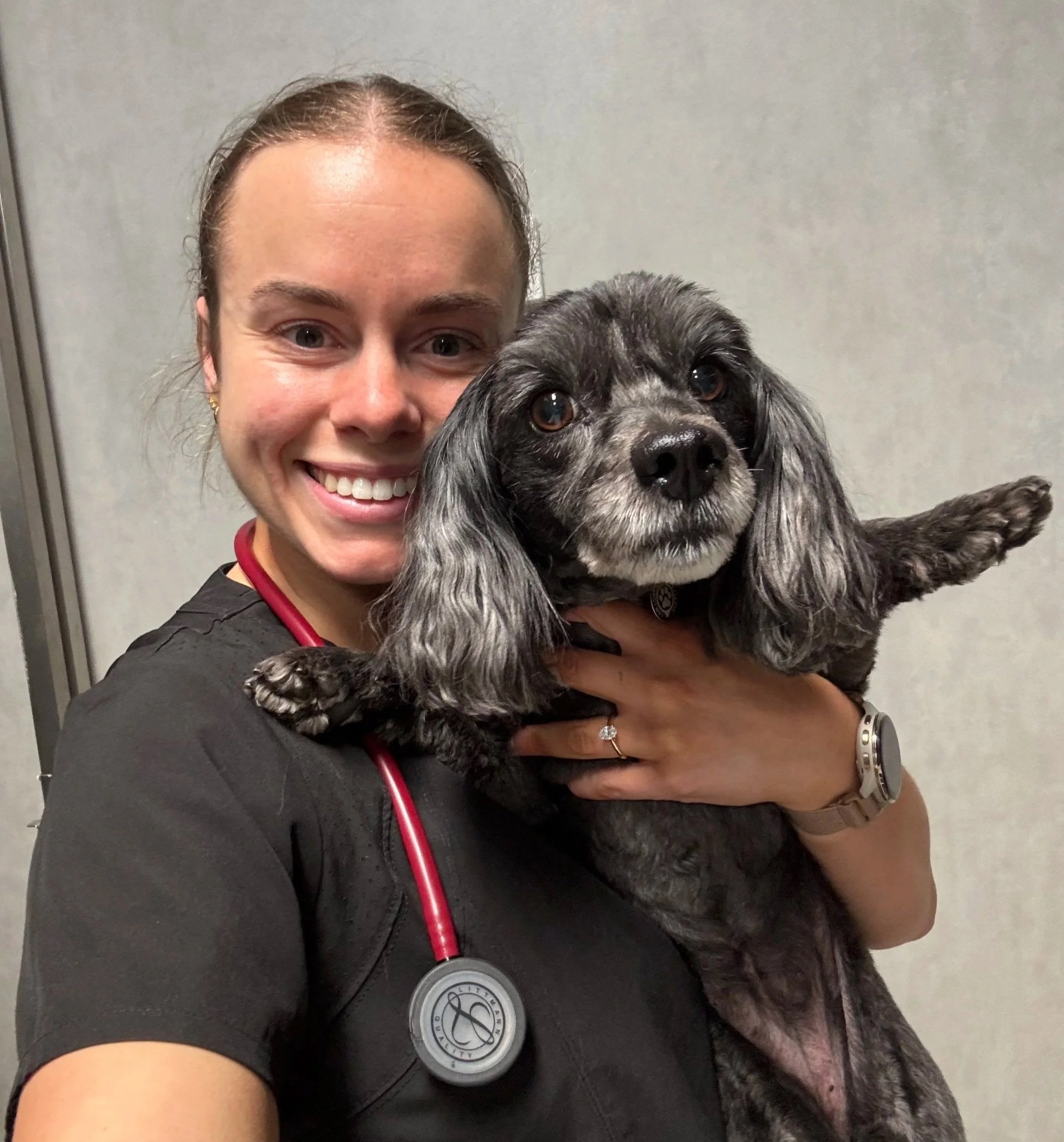
"We first discovered Lilly had 2 slightly broken teeth at an annual check up. They were monitored with regular dental checks for about 12 months while trying to decide if/when they needed to be removed. After that time it became obvious that she needed her teeth cleaned regardless so it was decided to go ahead with that and get a good look at the chipped teeth while she was under anaesthesia. Little did I know I would soon received a phone call saying that she needed to have 9 teeth removed and also had a large abscess. The ironic part is that none of the 9 teeth included the 2 broken teeth we had initially been worried about. I think everyone involved was just as shocked as I was. She had still been eating, chewing her dental chews, letting me brush her teeth and other than a slight slow down (which I assumed was just due to her age) she showed no major signs that she was in pain.
Fast forward a couple of weeks and I have a puppy all over again. We're back to early morning wake ups and zoomies anytime, anywhere. She is always up for an adventure and I'm so relieved, knowing she is pain free. My biggest concern now is making sure we have a solid monitoring plan in place to try to avoid the same thing happening again in the future, now that I know that she will do her best to hide her pain from me."
Lilly's story shows how well pets can hide mouth pain. It also shows why what we find during a dental procedure can be very different from what we see on the surface.
A healthier mouth, a more comfortable life
Untreated dental disease can mean ongoing pain, infection and damage to the teeth and bone. Research has also found links between gum disease and some heart and kidney problems. The clearest benefit, though, is the one we can act on now: less pain, less infection, and a pet who is comfortable and enjoying life with you.
Wondering what you can do at home between checks? Read our vets' guide to at-home dental care.
Planning for dental care
Dental treatment can be planned ahead, and we offer a range of payment options to help, learn more about our payment options here:
Book your pet's Dental Check by calling our team on (03) 6428 2703.